
Bilateral Collaboration Program with the US National Science Foundation (NSF)

METU Department of Environmental Engineering (Prof. Dr. İpek İmamoğlu) as project coordinator and researcher (Prof. Dr. F. Dilek Sanin), University of Maine, Arizona State University and GTE as project partners. The project “MiOCAP – Combining Molecular Level Microplastic-Organic Interaction with Meso-Scale Circularity Assessment for Macro-Scale Policy Impact” is supported by the “Support Programme for Increasing the Capacity to Benefit from International Research Funds and Participation in International R&D Collaborations” under the joint programme of the US National Science Foundation (NSF) and TÜBİTAK. The pilot region of the project is Izmir province and the beneficiary is Izmir Development Agency.

The main objective of the project is to develop a circularity performance assessment (CPA) framework and contribute to the development of strategies and policies in line with the outputs obtained from the framework to be developed in order to reduce the negative ecosystem impacts related to microplastics at large scale. In addition, a web-based tool will be introduced as a guide to measure the status and potential of circularity at the value chain level and strategy recommendations will be developed.

World Bank Green Industry Project Component-2

The project is implemented by the Ministry of Industry and Technology, TUBITAK and KOSGEB with the support of the World Bank. As a technical consultant in the “Turkey Green Industry Project – Component II” project, GTE prepared the Environmental and Social Management System and Projects User Manual.

With the project, it is aimed to ensure the green transition of industrial enterprises in line with the new requirements in export markets such as the World Bank, CBAM, Green Consensus for R&D and innovation projects related to the green transformation of the industry.

The Cross-border Climate Vulnerabilities and Remote Impacts of EU, Turkey and African Food Systems Project (CREATE)

“Cross-border Climate Vulnerabilities and Remote Effects of EU, Turkey and African Food Systems: Trade, Climate Risk and Adaptation (CREATE)” project, coordinated by Ankara University Water Management Institute (Assoc. Prof. Gökşen Çapar) and GTE is a project partner. H2020 Food Systems and Climate (FOSC) is supported under the ERA-NET Cofund 2019 call.

Works are carried out by a consortium of eight organizations from Turkey, Morocco, the Netherlands and Egypt. CREATE aims to develop a new cross-border climate risk/impact assessment methodology for food value chains based on the concept of established sourcing (e.g. water, soil and carbon) and trade that maps the representative links between socio-economic activities and remote climatic hazards in the EU, Africa and Turkey.

https://www.create4climate.com/

Establishment of Bakioğlu Holding Greenhouse Gas Emission Inventory

Carbon footprint calculation and greenhouse gas emission inventory studies are carried out within the framework of ISO 14064 and Greenhouse Gas Protocol standards within the scope of sustainability targets for Polibak, Bak Ambalaj, Bareks Plastik, Bareks Polyethylene and Bak Gravür, which are within Bakioğlu Holding. In this context, as a result of the verification studies carried out by the accredited auditor institution, ISO14064 Greenhouse Gas Emission Certificate certification studies were carried out for Bakioğlu Holding Packaging Group Companies.

Development of Circular Water Management Possibilities at Multisectoral (Urban, Industrial and Agricultural) Scale: The Case of Küçük Menderes River Basin

Project Objective
The main objective of the project titled “Development of Circular Water Management Opportunities at a Multisectoral Scale (Urban, Industrial, and Agricultural): The Case of the Küçük Menderes River Basin” is to enhance circular water management possibilities among urban, industrial, and agricultural water users within the Küçük Menderes Basin, thereby promoting rational and efficient water use.

Core Activities
Within the scope of the project, a feasible circular water management model was developed for various users and sectors, supported by a range of analyses and studies aimed at improving the model:

  • Basin Identification and Analysis:
    The basin’s physical structure, the quality and quantity of its water resources, sectoral usage status, and current natural processes were examined.

  • Water Use Profile Development:
    Urban, industrial, and agricultural water use profiles were created based on water consumption quantities, source types, and quality data at district and neighborhood levels.

  • Key Performance Indicators (KPIs) Identification:
    Indicators were determined and assessed to measure efficiency and circularity performance in each sector.

  • Wastewater Profiling and Reuse Analysis:
    Wastewater sources within the basin (treated and untreated) were analyzed, discharger-user matchings were carried out, and reuse opportunities were explored.

  • Water Pinch Analysis Application:
    Water pinch analysis was utilized to optimize water supply-demand matchings.

Key Outputs and Recommendations

  • A total of 14 implementation proposals were developed, focusing on recovery and reuse opportunities in the urban-industrial-agricultural context of circular water use, including:

    • Reuse of industrial wastewater for process water and irrigation purposes

    • Utilization of urban wastewater for park and garden irrigation as well as agricultural irrigation

    • Reintroduction of wastewater into industrial facilities

  • Under the scope of Nature-Based Solutions (NbS):

    • Rainwater harvesting

    • Practices such as wetlands and infiltration trenches were examined, and their existing potentials were evaluated.

Thanks to the project, an integrated circular water management model was developed across different sectors; its applicability was demonstrated both in the Küçük Menderes Basin and in other regions facing similar climate and water challenges. The developed approach offers a methodology that can serve as an example for sustainable water management in combating climate change.

We are trying to Reveal Water Management Possibilities in the Küçük Menderes Basin!

We have started our fieldwork within the scope of our new project, “Development of Cyclic Water Management Opportunities on a Multisectoral (City, Industry and Agriculture) Scale: The Case of Kucuk Menderes River Basin”.

Within the scope of the TÜBITAK 2519 Program, in this project, which we carry out in line with the COST Association – European Cooperation in Science and Technology (COST) CA 17133 Action (Circular City Re. Solution) objectives, we are among the urban, industrial and agricultural water users in the Kucuk Menderes River Sub-basin in Izmir province. We aim to reveal circular water management opportunities.

We hope that the project carried out in cooperation with Dokuz Eylül University and the General Directorate of State Hydraulic Works under the coordination of Istanbul Aydin University will be an essential step in solving the water access problems in the region in recent years.


Carbon and Water Footprint and Resource Efficiency Roadmap for Lignite Mining Industry

Polyak Eynez Enerji Üretim Madencilik San. ve Tic. Inc. In the Kınık Lignite Mine operation within the scope of the current situation assessment, carbon and water footprint reporting was made and resource efficiency and cyclical opportunities were evaluated in order to improve environmental performance. Under the heading of evaluation of the current situation, the calculation of the carbon and water footprint of the enterprise, reporting according to appropriate standards, competitor analysis and evaluation according to sectoral metrics were made.

In addition to the existing ESG approaches within the framework of national/international developments, assessment of transitional risks and good practice examples in the national/international arena, in addition to the existing ESG approaches, the European Union Green Agreement, the Paris Agreement and the Border Carbon Tax and similar developments are for the coal mining sector of our country and especially Polyak Eynez. A roadmap was prepared by GTE as a result of a comprehensive assessment of the opportunities and risks it creates for the company.

Mey|Diageo- Water Replacement Project in Manisa Region

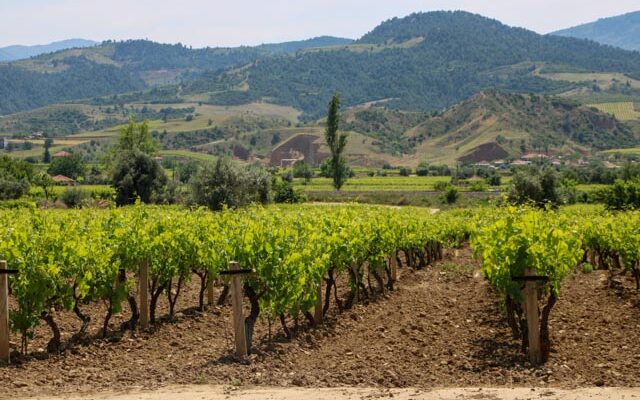
Within the scope of Mey|Diageo’s Ecosystem 2030 targets determined at the global level, the “Drip Irrigation” project was realized as the first water supply project of GTE in Alasehir, Manisa Region. In the project, where EWA Corporate Consulting is a project partner, infrastructure improvement was made by working with local municipalities and a local irrigation cooperative to establish a more efficient drip system.

The main purpose of the project is to increase the product quality, increase the yield and increase the income of the farmers in the vineyards of the region. Thanks to the project, it was foreseen that 50% savings could be achieved in the amount of water used, and more than 15,100 cubic meters of water was recovered in 2022.

May Diageo is Putting Back the Water!

As part of Mey Diageo’s “Global Water Stewardship Strategy” we have successfully implemented our first ever Water Replenishment project in Alaşehir, Manisa Region.

Together with EWA Kurumsal Danışmanlık we partnered with local municipalities and a local irrigation cooperative for the installation of a new, more efficient drip irrigation system – improving infrastructure and conserving water.

We expect this system to use around 50% less water than the previous flood-based system. And the technique has already enabled us to save over 15,100 cubic meters of water during 2022.

Use of Biomass to be Produced from Red Sea Algae in the Production of Valuable Bio-components

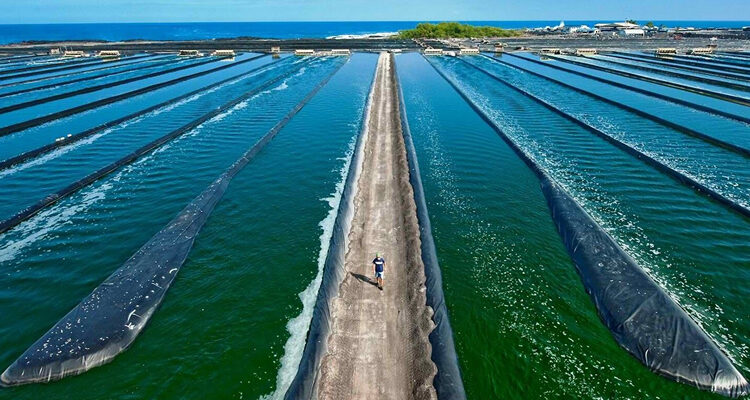
The consultancy of the project carried out by Kırıkkale University with the feasibility support provided by Ahiler Development Agency was done by GTE. In the project, it is aimed to reduce negative environmental impacts by using microalgae production and wastewater treatment synergistically and to provide commercial benefits for different sectors of algae biomass.

The project was completed in February 2021. During the feasibility study, a technical/economic feasibility study was conducted for a pilot plant for an innovative microalgae system that will provide nutrient recovery by treating wastewater with an intersectoral “symbiotic approach”.